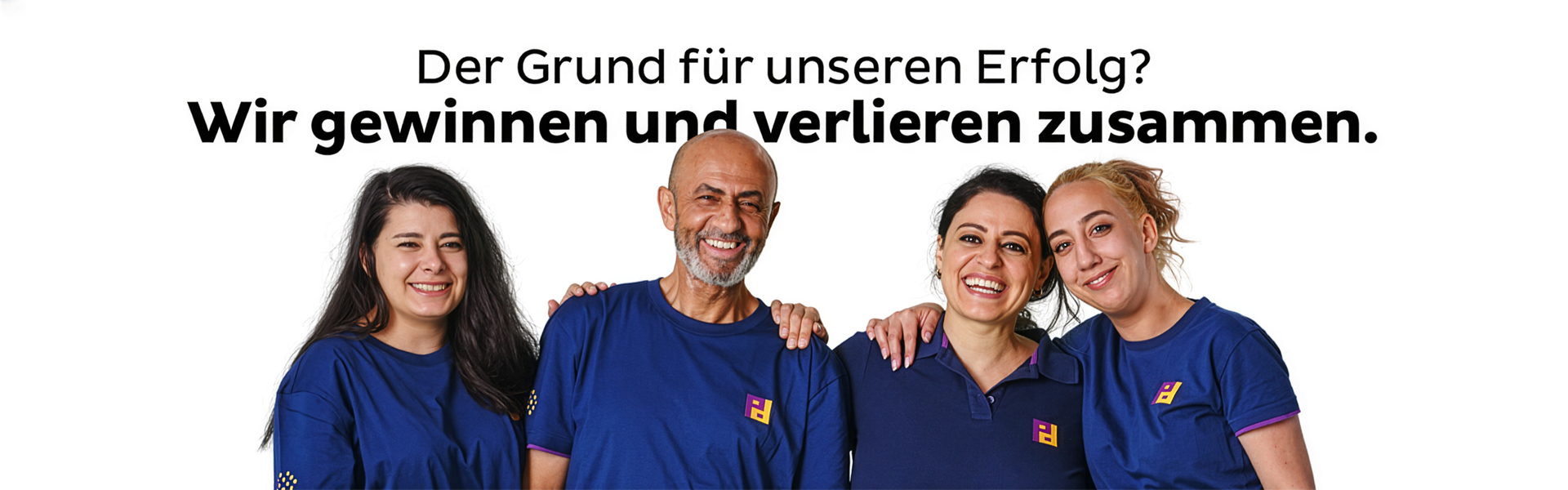
Our services are provided by people. Their working conditions, qualifications, and daily dedication directly shape the quality and reliability of our services. As a labor-intensive service company, we therefore bear a special responsibility to ensure safe and healthy working conditions, reliable framework conditions, and a collaborative environment characterized by respect and clear guidance.
This responsibility extends beyond our own workforce. As a client and business partner, we also take social and human rights requirements into account in our collaboration with suppliers and subcontractors. Social engagement is an integral part of our social responsibility. However, our focus is on fair and safe working conditions, the development of our employees, and social standards throughout the value chain.
The reality of work at Piepenbrock is diverse: Employees work at numerous customer sites, at different times, as part of a team or independently, and sometimes under physically demanding conditions. This gives rise to specific requirements in the areas of leadership, scheduling, occupational safety, communication, and training.
Management is carried out through collaboration among Human Resources, operational units, Occupational Safety, Compliance, Procurement, and other departments. Binding guidelines and responsibilities are supplemented by risk assessments, training, employee reviews, employee representative bodies, and complaint and reporting channels. We publish current key metrics and developments in our Sustainability Report.
Clear workflows, a structured onboarding process, and well-defined responsibilities provide guidance in day-to-day work. Managers are responsible for organizing work and fostering collaboration within their teams. They should be approachable, communicate decisions transparently, and support employees in their professional and personal development.
The vast majority of our employees are covered by collective bargaining agreements. For employee groups not covered by collective bargaining agreements, compensation is determined based on internal policies and responsibilities. Depending on the role and area of work, additional benefits and flexible work schedules may be offered. The specific options available depend on the company’s operational and organizational framework.
For questions, conflicts, or reports, internal contacts in the Human Resources and Compliance departments, an external ombudsperson, and a digital reporting platform are available. Reports can also be submitted anonymously through these channels.
Physically demanding tasks, changing work locations, and the use of cleaning chemicals, machinery, or technical equipment place special demands on occupational safety and health. That is why occupational safety is an integral part of the operational planning and execution of our services.
Hazards are identified through standardized risk assessments and translated into specific protective measures. These include mandatory work instructions, appropriate personal protective equipment, ergonomic work equipment, occupational health care, and regular training sessions. Depending on the area of operation, specific risks are also taken into account—for example, slip and fall hazards in building cleaning, work on technical equipment, or conflict situations in security services.
Workplace accidents and other safety-related incidents are analyzed to identify causes and further develop preventive measures. The current accident statistics and the scope of certified occupational safety management systems are disclosed in the sustainability report.
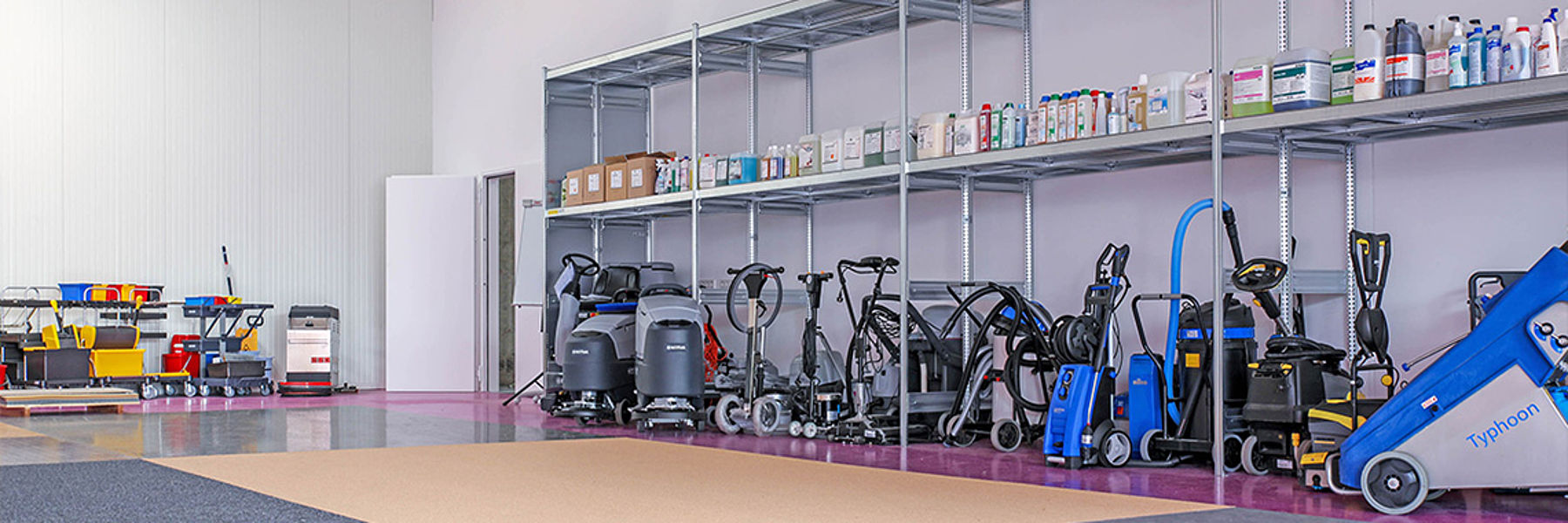
Our training programs combine in-person seminars at the Piepenbrock Academy, digital learning resources, and hands-on training at the Piepenbrock Technology Center. There, workflows, products, machines, and processes can be tested under realistic conditions before they are implemented at a customer’s site. Employee and development reviews help us discuss individual potential and next steps for growth.
Our human resources development program also includes apprenticeships, internships, and career guidance opportunities. We provide current figures on apprenticeships and continuing education in our Sustainability Report; our career portal offers insights into career fields and open positions.
At Piepenbrock, people with diverse skill sets, life paths, cultural backgrounds, and personal experiences work together. In the building cleaning industry in particular, the sector offers many people a pathway into the job market. This creates the challenge of structuring information, onboarding, and collaboration in a way that provides guidance and enables participation.
This includes communication that is easy to understand and as accessible as possible, clear work instructions, and multilingual digital resources. Our Code of Conduct sets out binding expectations for respectful behavior and makes it clear that discrimination or unfair treatment will not be tolerated. Piepenbrock has been a signatory to the Diversity Charter since 2010.
We do not view diversity as a one-time initiative, but rather as an ongoing task to be integrated into our daily work—in leadership, within teams, in training, and in our existing complaint procedures.
Unsere Dienstleistungen sind eng mit Lieferanten und Nachunternehmen verbunden. Es ist unser Anspruch, dass soziale und menschenrechtliche Risiken in unseren Beschaffungs- und Vergabeprozessen angemessen berücksichtigt und umgesetzt werden.
Our Human Rights Declaration and the Supplier Code of Conduct, among other documents, form the basis of our approach. Suppliers are included in our regular risk analysis and are assessed, for example, with regard to occupational safety, fair working conditions, and other human rights risks. If specific risks or indications are identified, we investigate the matter and, depending on the outcome, implement appropriate preventive or corrective measures. You can find more information on this in the Compliance section.

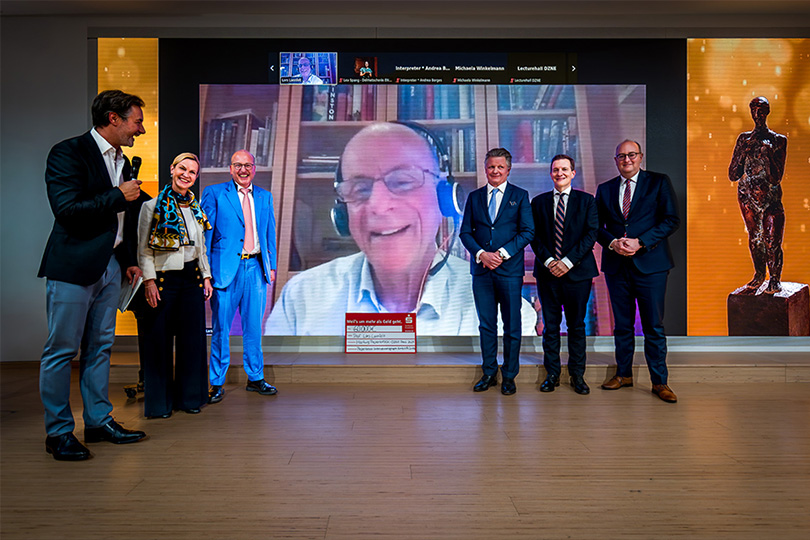
As a family-owned business with a nationwide presence, we also support social projects. Our long-term priorities include promoting scientific research and educational opportunities. Through the Hartwig Piepenbrock DZNE Prize, we recognize outstanding research achievements in the field of neurodegenerative diseases. Together with Plan International Germany, we have been supporting projects for children and young people since 2010.
In addition, our branches and employees are actively involved in regional social, cultural, and athletic initiatives. We report on the projects we are currently supporting and the activities taking place locally on the Piepenbrock blog. This commitment complements our responsibility as an employer and client, but does not replace it.
You can find the latest key figures on employment, collective bargaining coverage, workplace safety, training, diversity, and social engagement in the 2025 Sustainability Report (PDF). Piepenbrock publishes information on career opportunities and job openings on its career portal; current examples from day-to-day work and social engagement are featured on the Piepenbrock Blog.

30 years of sustainability management and "Piepenbrock Goes Green", 10 years of "Growth" campaign and sponsorship with Plan International Deutschland – our year 2020 is dominated by sustainability. We will be celebrating!
more
Sustainability plays an equally important role at Piepenbrock's affiliated companies LoeschPack and Hastamat. There, we summarise our ecological commitment under the motto "carbon-neutral packaging".
more